
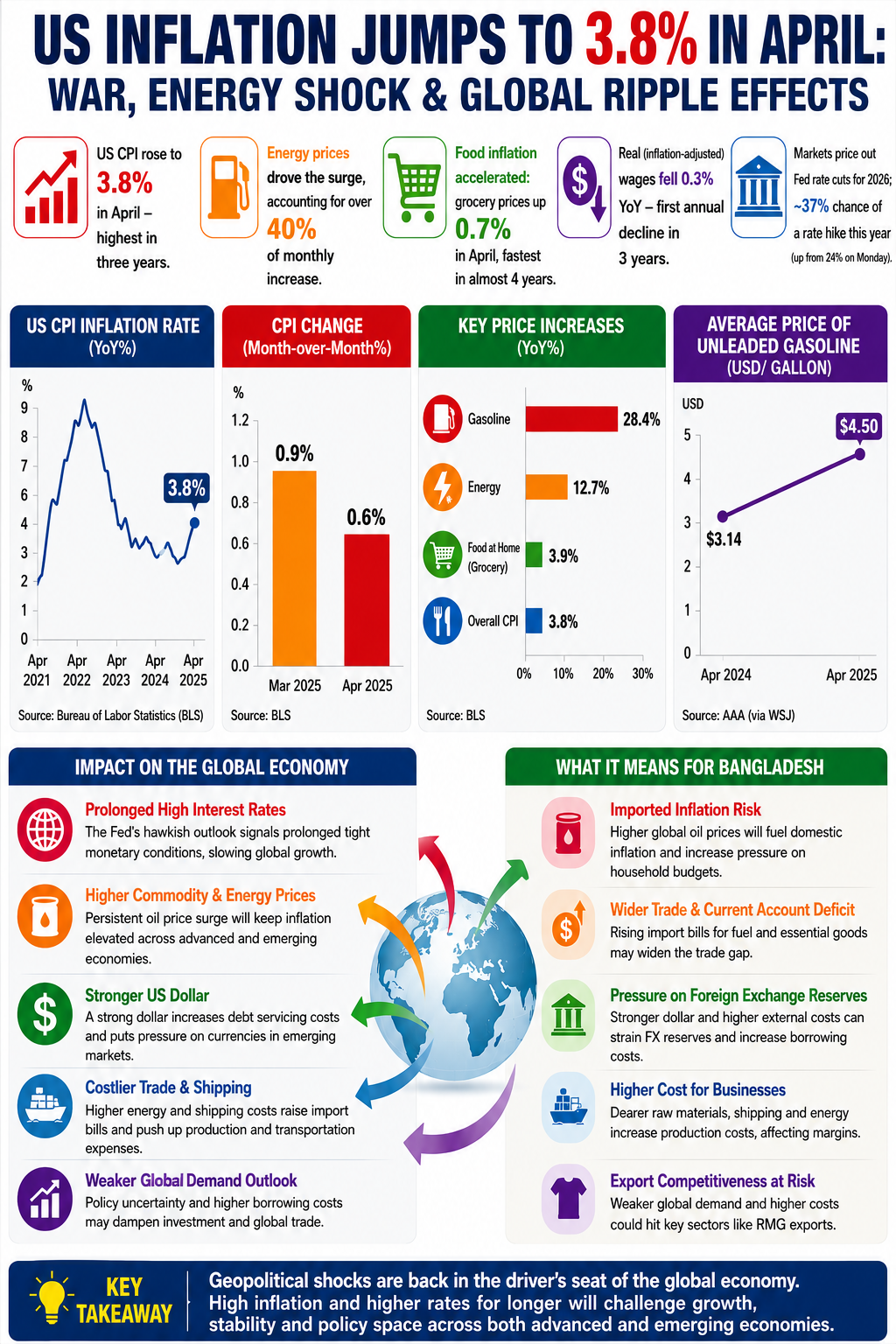
Dhaka, Bangladesh (BBN) - US inflation surged to 3.8% in April — the highest level in three years — as the Iran war sharply pushed up global energy prices, exposing how geopolitical shocks are again feeding into inflationary pressures worldwide.
According to the US Bureau of Labor Statistics, CPI rose 0.6% in April after a 0.9% jump in March, with energy accounting for over 40% of the monthly increase. Petrol prices alone climbed 28.4% year-on-year, while food inflation also accelerated at its fastest pace in nearly four years, according to media reports.
The implications extend far beyond the US economy. Markets have largely ruled out Federal Reserve rate cuts for 2026, while expectations of another rate hike are gaining traction. This signals a prolonged high-interest-rate environment globally.
For emerging economies like Bangladesh, the impact could be significant:
• Higher global oil prices may intensify imported inflation and widen trade deficits.
• A stronger US dollar and elevated interest rates could increase external borrowing costs and put renewed pressure on foreign exchange reserves.
• Rising shipping and commodity costs may further raise domestic production and transportation expenses.
• Global demand uncertainty could also affect export-oriented economies, particularly the apparel sector.
The latest US inflation data suggest that geopolitical risks are once again becoming a central driver of the global economic outlook — complicating monetary policy, trade flows and growth prospects across both advanced and developing economies.
BBN/SSR/AD